
China Best Concrete Screws How to Choose Reliable Suppliers?

Time:2026-10-22 Author:Madeline
0%

Choosing the best Concrete Screws supplier in China requires more than comparing catalog prices. Product quality depends on steel grade, thread accuracy, heat treatment, coating performance, and production control. A reliable supplier should explain these details clearly, not hide behind attractive photographs or vague certifications.

Begin by checking the factory’s experience with construction fasteners. Ask for material reports, coating specifications, dimensional inspection records, and independent test results. Request samples before placing a large order. Examine the screw head, thread edges, point shape, and surface finish. Test installation in the actual substrate, such as concrete or masonry. Record driving torque, holding strength, and signs of coating damage. Small details matter.

Factory evidence matters.

A supplier with real expertise will discuss suitable applications instead of promising one screw for every project. Review its quality system, production equipment, export history, packaging process, and response time. Confirm whether batch numbers support traceability from raw material to shipment. Clear communication is also essential when changing lengths, diameters, finishes, or packaging labels.

Price alone can mislead.

Very low quotations may reflect thinner coatings, inconsistent steel, weak inspection, or unclear shipping terms. Still, even experienced buyers can miss hidden risks during a rushed evaluation. That possibility deserves attention. Compare total cost, failure risk, replacement time, and technical support before choosing. A dependable Chinese supplier should welcome reasonable audits, provide consistent samples, and correct mistakes transparently. The strongest partnership is built through verified performance, honest communication, and repeatable quality rather than promises alone.
China Best Concrete Screws How to Choose Reliable Suppliers?

Concrete Screw Types: 5–10 mm Diameters and Common Head Designs

China Best Concrete Screws: How to Choose Reliable Suppliers?

Concrete screws usually range from 5 to 10 mm in diameter. The correct size depends on load, embedment depth, and base material. A 5 or 6 mm screw suits light fixtures and cable clips. For rails, brackets, and heavier supports, 8 or 10 mm options provide greater holding capacity. Always verify the manufacturer’s published pull-out and shear data, not only the diameter.

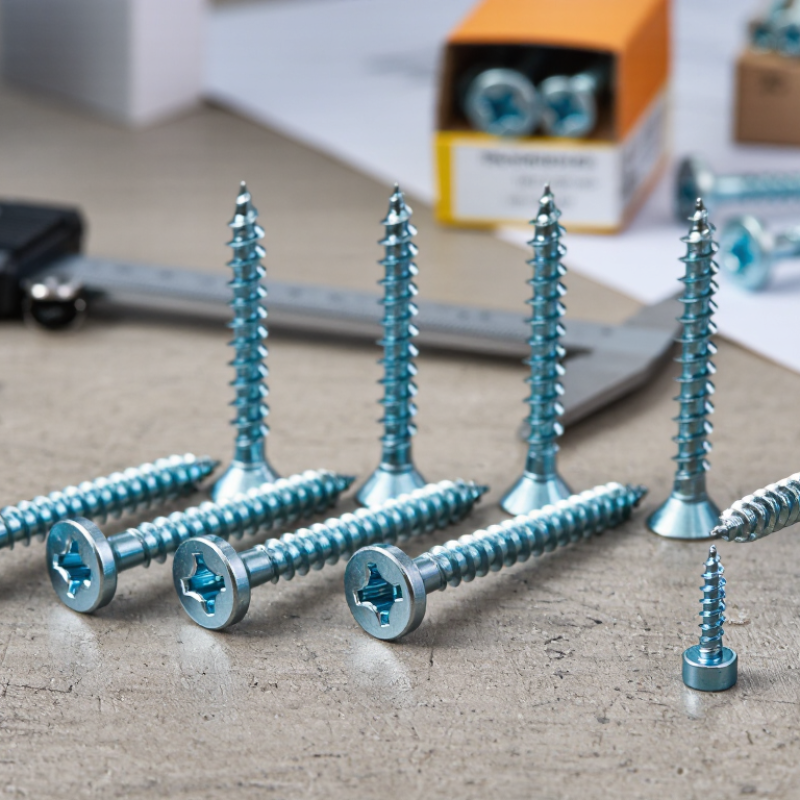
Head design matters during installation. Hex washer heads offer strong wrench access and spread pressure across a washer face. Countersunk heads sit flush in masonry, which helps finished surfaces look cleaner. Pan heads work well where a compact profile is preferred. Torx-style drives can reduce cam-out, but poor bit matching still causes damage. It happens.

The U.S. Census Bureau reported construction spending above 2.1 trillion dollars in 2024, increasing demand for dependable fastening systems. Grand View Research’s 2024 construction fasteners analysis also identifies infrastructure and commercial building activity as major growth drivers. When comparing suppliers, request corrosion-test results, batch traceability, installation torque guidance, and independent evaluation documents such as ICC-ES or European technical assessments. A supplier offering only attractive pricing is not necessarily reliable. I would also inspect sample screws personally: uneven threads, chipped coatings, or inconsistent heads often reveal weak process control before installation begins.

Check Strength Data Using EN 1992-4 and ICC-ES AC106 Requirements

China Best Concrete Screws: How to Choose Reliable Suppliers?

A reliable supplier should provide traceable strength data, not only attractive product photos. Ask for test reports covering the exact screw diameter, embedment depth, and concrete strength. Under EN 1992-4, design checks should address tension, shear, spacing, edge distance, and cracked or uncracked concrete. Numbers need context. A reported ultimate load is not the same as a design resistance after safety factors. Small gaps matter.

Request evidence aligned with ICC-ES AC106 requirements for screw anchors in concrete. The documentation should identify the test method, concrete condition, installation procedure, and failure modes. It should also state drilling diameter, cleaning method, installation torque, and allowable temperature range. Compare results under similar conditions. Otherwise, the comparison becomes misleading.

During supplier evaluation, inspect batch records and independent laboratory reports. Ask whether production samples match the tested screw geometry and steel grade. A site trial can reveal difficult installation, damaged threads, or unstable torque readings. These details are easy to miss. I would not rely on a translated table alone. Some supplier files look complete but omit cracked-concrete data. That weakness deserves a written explanation before purchasing. Mistakes can happen during testing or installation, so practical instructions should be clear, specific, and easy to verify on site.

China Best Concrete Screws: How to Choose Reliable Suppliers?

Reference concrete compressive-strength classes used when checking concrete screw anchors under EN 1992-4. The cylinder strength values are characteristic values defined for the concrete class; actual anchor resistance must be taken from the applicable ETA, technical assessment, or ICC-ES evaluation report.

EN 1992-4 anchor design requires the relevant concrete strength, installation conditions, edge distances, spacing, and failure modes to be verified. ICC-ES AC106 is an acceptance criterion for evaluating hardened screw anchors through testing; it does not provide one universal load value for every screw. When comparing suppliers, request traceable test reports, installation instructions, corrosion information, and product-specific approval documentation.

Compare Corrosion Protection: Zinc-Plated, Ruspert, and 304 Stainless Steel

China Best Concrete Screws: How to Choose Reliable Suppliers?

Corrosion protection should match the installation environment, not just the lowest quotation. Zinc-plated concrete screws suit dry indoor work and short-term projects. Their bright surface looks clean, but scratches can expose the steel quickly. Ruspert coatings use layered protection and usually perform better in damp areas. However, coating quality varies between production batches. Request coating thickness data and independent salt-spray results. 304 stainless steel offers strong resistance in wet rooms, coastal air, and many outdoor applications. It costs more. It can also suffer staining or corrosion in severe chloride conditions, so “stainless” is not a magic word.

From my site experience, failure often starts with the wrong substrate or excessive installation torque. A reliable supplier should provide steel grade records, dimensional inspection reports, and clear installation guidance. Ask for samples before placing a large order. Check thread shape, head quality, drilling performance, and pull-out consistency in your actual concrete. Supplier audits matter too. Review factory testing equipment, traceability, and response speed when problems appear. Some documents look impressive but explain little. That deserves reflection.

Tips: Choose zinc-plated screws for dry interiors, Ruspert for general damp exposure, and 304 stainless steel for demanding moisture conditions. Confirm the coating system, not only its name. Compare test results from the same standard. Inspect several samples, because one good screw proves very little. A dependable supplier welcomes technical questions and reports weaknesses honestly.

Evaluate Suppliers Through ISO 9001, Batch Traceability, and Test Reports

China Best Concrete Screws: How to Choose Reliable Suppliers?

Supplier evaluation should begin with evidence, not attractive samples. The ISO Survey 2023 recorded 1,265,216 ISO 9001 certificates worldwide. However, ISO 9001 confirms a quality management system, not automatic screw performance. Check the certificate scope, issuing body, validity, and manufacturing address. The scope should cover fastener design or production. A certificate covering only trading activities deserves closer review.

Batch traceability is equally important. Ask suppliers to link each carton to a heat number, production date, raw-material record, coating process, and inspection result. During a practical audit, scan one carton and request its full history. The trail should reach the steel source. It should also identify the production line. Missing links create uncertainty.

Test reports must show actual product details. Request reports for tensile capacity, pull-out resistance, shear strength, installation torque, and corrosion performance. The report should state screw diameter, embedment depth, concrete strength, test method, sample quantity, and failure mode. ISO 17025 accreditation adds credibility to laboratory results. Still, one report may represent one batch only. That is a weakness worth discussing. Compare several recent reports, then order a controlled sample and test it independently. A supplier who welcomes verification is usually more reliable than one offering only polished documents.

Verify Load Capacity, Installation Torque, and Warranty Before Ordering

China Best Concrete Screws: How to Choose Reliable Suppliers?

Verify load capacity, installation torque, and warranty before ordering. These details reveal more than a polished product photograph.

A reliable supplier should provide tested load data for tension and shear. Ask which concrete strength, embedment depth, and edge distance were used. A screw rated for cracked concrete may perform differently in old, dusty masonry. Check the test date and report scope. Vague figures deserve careful questions. On site, I inspect the substrate before selecting fasteners. Concrete dust, hollow areas, and damaged edges can reduce holding strength quickly. Small details matter.

Installation torque also needs clear guidance. Request the recommended torque range, drill diameter, and cleaning method. A calibrated torque wrench helps prevent under-tightening and thread damage. Do not assume more torque means greater strength. It can weaken the connection. I have seen installers rush this step, especially during overhead work. That shortcut was not harmless. Suppliers should explain replacement procedures for failed or damaged screws.

Read the warranty in full, not only the headline period. Confirm coverage for corrosion, manufacturing defects, and documented installation conditions. Ask whether technical support includes drawings, test records, and response times. A dependable supplier answers specific questions without avoiding uncomfortable limitations. Compare samples when possible, and record batch numbers after delivery. I would also order a small trial quantity first. It costs more time, but it may expose inconsistent threads or coating problems before a larger purchase.

China Best Concrete Screws How to Choose Reliable Suppliers? - Verify Load Capacity, Installation Torque, and Warranty Before Ordering

Verification Dimension Recommended Specification or Benchmark Evidence to Request Before Ordering Buyer Evaluation Result
Concrete screw diameter Common commercial sizes are approximately 6.3 mm, 7.5 mm, 10 mm, and 12 mm. The selected diameter must match the tested load and fixture hole. Dimensional drawing, tolerance data, and installation instructions stating the required drill-bit diameter. Pass: Complete dimensional documentation supplied.
Available screw length Commercial lengths commonly range from about 40 mm to 200 mm. Required length should cover fixture thickness plus the specified effective embedment. Length chart showing thread length, head dimensions, and minimum effective embedment for each size. Pass: Length selection can be calculated without guesswork.
Concrete strength range Load performance should be reported separately for cracked and uncracked concrete and for the tested concrete strength class, such as C20/25 or C25/30. Independent test report or technical assessment identifying concrete strength, crack condition, edge distance, spacing, and failure mode. Pass: Test conditions match the intended project.
Load capacity verification Tension and shear capacities must be stated separately. Design values should include safety factors and reductions for edge distance, spacing, cracked concrete, and installation direction. Load tables with characteristic resistance, recommended design load or allowable load, safety factors, and failure modes. Pass: Values are traceable to a test or recognized assessment.
Minimum embedment depth Many concrete screw systems use effective embedments roughly within the 30–100 mm range, depending on diameter, length, concrete, and approval requirements. The manufacturer’s tested value controls. Installation diagram specifying minimum embedment, hole depth, fixture thickness, and required edge distance. Pass: Installation geometry is clearly defined.
Installation torque There is no universal torque value for concrete screws. The specified torque must be given for each diameter, drive type, concrete condition, and installation method. Do not substitute a generic bolt torque chart. Torque table in N·m, approved driver settings, socket or bit requirements, and instructions for torque-controlled installation. Pass: Torque values are product-specific and repeatable.
Hole preparation The hole diameter, drilling depth, cleaning method, and drilling mode must follow the tested installation procedure. Dust or an oversized hole can reduce performance. Step-by-step installation guide covering drilling, hole cleaning, screw alignment, and reinstallation limits. Pass: Installation variables are controlled and documented.
Steel and coating Confirm carbon steel or stainless steel grade, surface coating, corrosion category, and suitability for indoor, outdoor, damp, or chemically aggressive environments. Material certificate, coating specification, salt-spray or corrosion test data, and applicable corrosion classification. Pass: Material and corrosion claims are supported by test evidence.
Thread and head consistency Threads should be clean and continuous, with consistent pitch, head geometry, and drive recess. Damaged threads or poor drive engagement can cause premature installation failure. Inspection standard, dimensional tolerances, sample photographs, and pre-shipment inspection records. Pass: Quality controls cover both dimensions and appearance.
Quality management A documented quality system should control incoming steel, heat treatment, coating, thread forming, final inspection, and batch traceability. Valid quality-management certificate, control plan, batch-number format, and sample inspection report. Pass: Each production batch can be traced to inspection records.
Warranty terms A practical commercial warranty should state coverage period, product defects covered, installation exclusions, claim evidence, replacement policy, and response time. Signed warranty document, claim procedure, batch traceability requirements, and written remedy for nonconforming products. Pass: Warranty responsibilities are specific rather than verbal.
Pre-shipment sample test Before mass production, test representative samples for dimensions, installation behavior, torque, tension, and shear under the intended concrete conditions. Signed sample approval report, photographs, test results, and agreed acceptance criteria. Pass: Samples are approved before the production order.
Packaging and traceability Packaging should protect threads and coating from impact and moisture. Each carton should identify size, material, coating, quantity, batch number, and production date. Packaging artwork, carton markings, packing list, and batch traceability procedure. Pass: Product identity remains clear throughout storage and delivery.

Note: Load capacities and installation torque are application-specific. Final selection should be based on the supplier’s tested technical documentation and the actual concrete strength, crack condition, edge distance, spacing, fixture thickness, and installation procedure.

FAQS

What diameter should I choose for a concrete screw?

Diameters commonly range from 5 to 10 millimeters. Use 5 or 6 millimeters for light fixtures and cable clips. Choose 8 or 10 millimeters for rails, brackets, and heavier supports. Diameter alone does not prove capacity.

How does head design affect installation?

Hex washer heads provide wrench access and distribute pressure. Countersunk heads sit flush with masonry. Pan heads suit compact installations. Choose the surface finish before drilling.

Can a star-drive recess reduce installation damage?

It can reduce cam-out when the bit fits correctly. A poor match may damage the recess and screw. Small detail. Big frustration.

What strength information should a supplier provide?

Request pull-out and shear data for the exact diameter and embedment depth. Reports should identify concrete strength and test conditions. Ultimate load is not the same as design resistance. Safety factors change the answer.

Which concrete conditions need checking?

Confirm whether the concrete is cracked or uncracked. Check tension, shear, spacing, and edge distance. These factors can significantly change performance. The table may look simple, but reality is less tidy.

What installation details should technical documents include?

Look for drilling diameter, hole-cleaning method, installation torque, and temperature limits. Instructions should match the tested screw geometry. Vague guidance creates avoidable site errors.

How can I inspect screw quality before purchasing?

Examine samples for uneven threads, chipped coatings, and inconsistent heads. Review batch records and steel-grade information. A shiny sample proves very little.

Why is a site trial useful?

A trial can reveal difficult drilling, damaged threads, or unstable torque readings. It also tests whether workers can follow the instructions. Mistakes still happen. I would not skip this step.

Conclusion

Choosing reliable Concrete Screws requires more than comparing prices. Start by selecting the correct diameter, typically between 5 and 10 mm, along with a head design suited to the application, such as hex, countersunk, or pan head. Review strength data against EN 1992-4 and ICC-ES AC106 requirements to confirm that the screws are appropriate for the expected loads and concrete conditions. Corrosion protection is also important: zinc-plated screws may suit dry indoor environments, Ruspert coatings provide improved resistance, and 304 stainless steel is a strong option for damp or corrosive locations.

Before ordering, evaluate each supplier’s ISO 9001 quality system, batch traceability, and independent test reports. Ask for clear information about load capacity, recommended installation torque, drilling requirements, and inspection procedures. A dependable supplier should also provide consistent documentation, technical support, and a clearly defined warranty. Comparing these factors helps buyers reduce installation risks, ensure long-term performance, and select products that meet both project specifications and service-environment demands.

Madeline

Madeline

Madeline is a dedicated marketing professional with a wealth of expertise in our company's core offerings. With a keen understanding of the industry, she brings a unique perspective to her role, consistently delivering high-quality content that highlights the superior aspects of our products. As......