
How to Choose the Right Rubber Washers in 2026?

Time:2026-09-14 Author:Aria
0%

Choosing the right Rubber Washers in 2026 requires more than matching a hole diameter. These small components control sealing, vibration, pressure distribution, and surface protection. A washer that looks suitable on a workbench may compress too quickly inside a heated enclosure. I have seen this mistake in field maintenance. The fastener stayed tight, but the washer hardened and allowed moisture to enter.

Material selection deserves careful attention. EPDM can perform well against weather and water, while silicone remains useful across wider temperature changes. Nitrile rubber is often considered for oil exposure, but compatibility depends on the exact fluid and operating conditions. Do not rely on color alone. Check hardness, thickness, temperature range, compression behavior, and the manufacturer’s test information. Small details matter.

The correct size also depends on the bolt, mating surface, clamping force, and expected movement. A thick washer is not automatically better. It may prevent proper thread engagement or create uneven pressure around a thin panel. Measure the inner diameter, outer diameter, and installed thickness. Then test a sample under realistic conditions.

This guide explains practical selection methods for engineers, installers, and purchasing teams. It considers sealing performance, material durability, environmental exposure, and quality documentation. Some recommendations may still need adjustment. Real assemblies are rarely perfect. That is why careful testing remains more reliable than a convenient catalog shortcut.
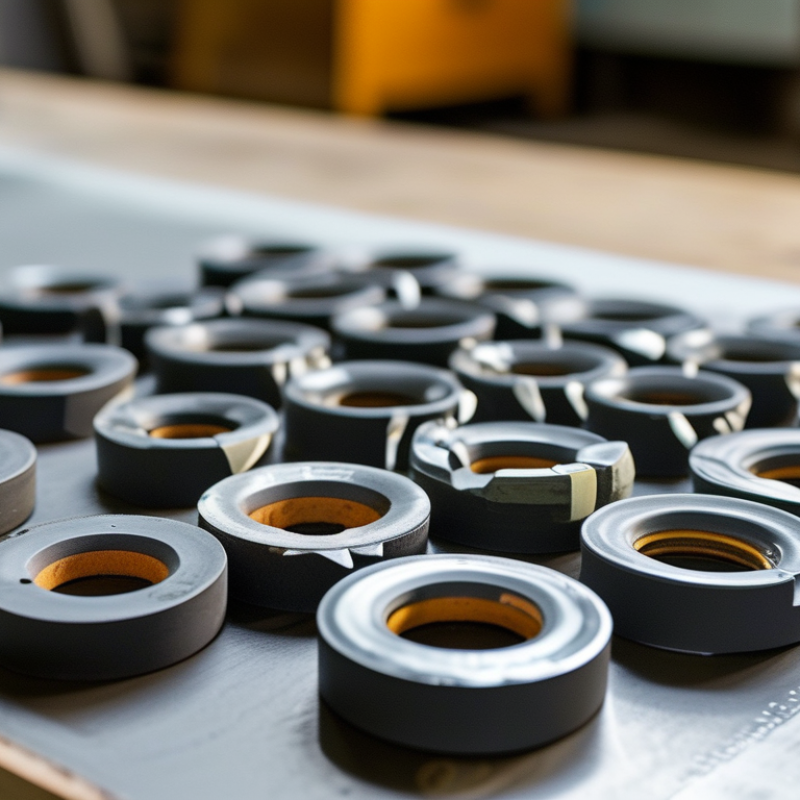
How to Choose the Right Rubber Washers in 2026?

Understanding Rubber Washer Types and Their Common Applications

How to Choose the Right Rubber Washers in 2026?

Understanding Rubber Washer Types and Their Common Applications

Rubber washers do more than fill a gap. They spread clamping pressure, reduce vibration, and help seal water or air around a fastener. In field repairs, I have found that a washer can look correct yet fail after repeated heat cycles. Material selection matters more than appearance.

Nitrile rubber suits oil, fuel, and many pneumatic fittings, while EPDM performs well against water, steam, sunlight, and outdoor weather.

Silicone remains flexible in cold conditions and handles high temperatures, but it may tear under sharp compression.

Neoprene offers balanced resistance for appliances, cable entries, and general plumbing.

Fluoroelastomer is useful around aggressive chemicals and elevated heat, although its cost can be difficult to justify for simple joints.

Check the washer’s inner diameter, outer diameter, and thickness against the fastener and mating surface. Then consider temperature, pressure, movement, and fluid exposure.

A soft washer seals uneven surfaces effectively. A harder grade resists extrusion under heavy tightening. Do not overtighten it. That mistake is common. It can crush the washer and create a leak path.

I also inspect the sealing surface for burrs, dust, and scratches before installation. My earlier assumption that thicker always meant better was wrong; thickness must match the joint design and available compression.

Identifying Material Properties for Different Environments

How to Choose the Right Rubber Washers in 2026?

Choosing a rubber washer starts with the environment, not the bolt size. Temperature, moisture, chemicals, pressure, and movement can change performance quickly. In field inspections, I first record the highest and lowest operating temperatures. Continuous heat can cause hardening, while sudden cooling may reduce flexibility. Small details matter. A washer beside an outdoor pump may face sunlight, rain, vibration, and oil mist at the same time.

For water, steam, and outdoor exposure, EPDM usually provides strong weather and ozone resistance. It is a poor choice for petroleum-based oils. Nitrile rubber handles mineral oils and fuels better, but sunlight and ozone can shorten its service life. Silicone remains flexible across wide temperature ranges, although it may tear more easily under sharp compression. Fluoroelastomer materials resist demanding chemicals and heat, but their higher cost needs justification.

Do not rely on hardness alone. Check compression set, swelling, tensile strength, and chemical compatibility. A washer that feels firm may still leak after repeated heating. I have seen failures caused by over-tightening rather than unsuitable rubber. That possibility is easy to miss. Review the washer’s actual exposure, including cleaning agents and storage conditions. When information is incomplete, testing a small sample under real temperature and chemical conditions is safer than guessing. Be willing to revise the specification after inspection.

Matching Washer Size, Shape, and Thickness to Fasteners

Choosing the right rubber washer starts with the fastener, not the washer bin. Measure the bolt diameter, thread clearance, and bearing surface. A washer hole should allow smooth installation without excessive movement. For a 6 mm bolt, a 6.4–6.6 mm inner diameter often provides practical clearance. Confirm the actual hardware, because nominal sizes can vary.

Shape controls sealing and load distribution. A flat washer suits broad, even surfaces. A shoulder washer helps isolate a bolt from a panel edge. Use a bonded or sealing washer when fluid could follow the fastener path. The Freedonia Group’s 2024 World Industrial Rubber Products report identifies sealing applications as a major demand area, reflecting the cost of small leakage failures. In testing, inspect the contact ring, not only the outside diameter.

Thickness needs careful judgment. A thin washer may compress too quickly and lose recovery. A thick washer may prevent proper thread engagement. ISO 3601 guidance for elastomer seals emphasizes controlled dimensions and compression, although a flat rubber washer is not an O-ring. As a practical starting point, choose thickness near 1.5–3 mm, then verify compression under real torque. ASTM D395 data on compression set is useful here: lower permanent deformation usually supports better long-term sealing. I have seen oversized washers look safer, yet distort under uneven tightening. That assumption deserves testing. Temperature, chemicals, surface roughness, and torque can change the result. Record them. Small details matter.

Evaluating Temperature, Chemical, Pressure, and Load Resistance

How to Choose the Right Rubber Washers in 2026?

Temperature is the first filter, but not the final decision. Engineering tables aligned with ASTM D2000 commonly place NBR service near -40 to 108°C, EPDM near -50 to 150°C, and FKM near -20 to 200°C. Silicone can handle roughly -60 to 200°C, but its tear strength is often lower. These figures are guidance, not promises. A washer beside a hot flange may see uneven heating, compression, and sudden cooling.

Chemical resistance must match the actual fluid, including additives and cleaning agents. ASTM D471 immersion testing measures volume and hardness changes after exposure. NBR usually suits mineral oils, while EPDM performs better with water, steam, and many mild chemicals. FKM handles many fuels and hydrocarbons. Still, concentration and exposure time can change the result. A tidy compatibility chart may mislead.

Pressure and load require closer inspection. ISO 815-1 and ASTM D395 compression-set data help show whether a washer will recover after long compression and heat. A harder compound may resist extrusion, yet it can seal poorly on a scratched surface. Check the gap, bolt torque, washer thickness, and flange movement. Pressure ratings are not universal. They depend on geometry and support. I would request test data at the real temperature, fluid, and load. That extra step feels slow, but guessing here is expensive.

How to Choose the Right Rubber Washers in 2026? - Evaluating Temperature, Chemical, Pressure, and Load Resistance
Washer Material Typical Continuous Temperature Chemical Resistance Pressure Suitability Load and Compression Resistance Weathering and Aging Dimension and Design Guidance
Silicone -60°C to +200°C
(-76°F to +392°F)
Excellent resistance to ozone, ultraviolet light, moisture, and many dilute chemicals.

Weak against petroleum oils, fuels, and many solvents.
Low to medium for static sealing; avoid high-pressure applications unless supported by a suitable design. Low to medium. Remains flexible over a wide temperature range but has relatively low tear and abrasion resistance. Excellent Use a thicker section when flange flatness is poor. Common static washer thicknesses are approximately 1.5–5 mm. Avoid excessive bolt compression, which can cause permanent deformation.
EPDM -50°C to +150°C
(-58°F to +302°F)
Excellent resistance to hot water, steam, glycol-based coolants, dilute acids, alkalis, and ozone.

Not suitable for petroleum oils, mineral oils, or hydrocarbon fuels.
Medium to high for properly compressed static applications; suitable for water and outdoor service. Medium to high Excellent For static flanges, a 2–4 mm thickness is commonly practical. Use adequate outer diameter to prevent extrusion and maintain even compression around bolt holes.
NBR / Nitrile -30°C to +100°C
(-22°F to +212°F)
Excellent resistance to mineral oils, hydraulic oils, and many petroleum-based fuels.

Limited resistance to ozone, sunlight, hot air, and strong oxidizing chemicals.
Medium to high for oil-service static sealing when properly supported. High. Good tensile strength, abrasion resistance, and resistance to repeated compression. Fair to good; protect from direct sunlight and ozone where possible. Typical static washer thickness is approximately 1.5–5 mm. Use a harder compound or an anti-extrusion support when pressure, clearance, or bolt load is high.
FKM / Fluoroelastomer -20°C to +200°C
(-4°F to +392°F)
Excellent resistance to mineral oils, fuels, many acids, and aggressive chemicals at elevated temperatures.

Poorer resistance to hot water, steam, strong alkalis, and some low-temperature applications.
High for static sealing when the compound, hardness, and clearance are correctly selected. High. Good resistance to compression set at elevated temperatures. Excellent Use approximately 1.5–4 mm for standard static washers, increasing thickness when flange irregularity or bolt-hole clearance requires it. Verify low-temperature flexibility before outdoor use in cold climates.
Neoprene / CR -40°C to +120°C
(-40°F to +248°F)
Good resistance to water, diluted acids, alkalis, ozone, and many refrigerants.

Only moderate resistance to petroleum oils and fuels.
Medium for static sealing and general-purpose mechanical service. Medium to high. Good balance of elasticity, toughness, and abrasion resistance. Good to excellent Thicknesses of approximately 2–5 mm are common for static washers. Suitable for outdoor assemblies where moderate oil exposure and good weather resistance are required.
PTFE -200°C to +260°C
(-328°F to +500°F)
Excellent resistance to most acids, bases, solvents, water, and fuels. High chemical-service capability, but pressure performance depends strongly on creep, temperature, washer thickness, and support. High compressive strength but significant cold flow and creep under sustained load; not as elastic as rubber. Excellent Use a thicker washer or filled grade when long-term bolt preload retention is important. Maintain sufficient land around the hole because thin PTFE washers can deform under load.
Selection notes: Temperature limits are typical service ranges for standard compounds and may vary by formulation, hardness, pressure, and exposure time. Pressure and load ratings cannot be assigned from material alone; they also depend on washer thickness, inside and outside diameter, flange flatness, bolt preload, clearance, surface finish, and the presence of an anti-extrusion support. For critical applications, confirm the compound with the fluid supplier and validate the complete washer design through testing.

Checking Quality, Standards, Compatibility, and Long-Term Performance

How to Choose the Right Rubber Washers in 2026?

Checking Quality, Standards, Compatibility, and Long-Term Performance

A rubber washer is small, but its failure can loosen a joint, admit water, or damage a surface. Start with quality evidence, not appearance. Request hardness, tensile strength, elongation, compression-set, and dimensional inspection results. ASTM D2000 helps classify elastomer performance, while ASTM D395 measures compression set. These documents make comparisons less subjective. A glossy washer may still be poorly cured. Looks can mislead.

Compatibility must match the real service environment. Check fluid, temperature, pressure, ultraviolet exposure, and contact materials. Nitrile often suits petroleum oils; EPDM generally performs better with water, steam, and weathering. Neither choice is universal. ISO 815-1 compression-set data and supplier aging results reveal whether sealing force survives time.

The 2023 IMARC rubber market report valued global rubber demand at about US$46.3 billion. Mordor Intelligence’s 2024 assessment projects demand to rise from approximately 29.2 million tonnes in 2024 to 36.7 million tonnes by 2029. Market growth does not guarantee consistent washer quality.

Choose dimensions from measured hardware, including inner diameter, outer diameter, and thickness. Allow for compression without over-tightening. Test a sample under actual torque and temperature. Inspect it after cycling, not immediately. One hour proves little. Keep batch numbers, certificates, and test dates for reliable replacement decisions. I would still question generic “chemical resistant” claims. Ask which chemical, concentration, temperature, and exposure duration were tested. Long-term performance is specific, measurable, and sometimes disappointing.

FAQS

How should I choose a rubber washer for a specific environment?

Start with temperature, moisture, chemicals, pressure, sunlight, and movement. Record the highest and lowest operating temperatures. Small details matter.

Which rubber material suits water, steam, and outdoor exposure?

EPDM usually resists weather, ozone, water, and steam well. Avoid it with petroleum-based oils. Conditions can overlap.

When is nitrile rubber a suitable choice?

Nitrile generally handles mineral oils and fuels better. However, sunlight and ozone may shorten its service life. Protect it from prolonged outdoor exposure.

Is silicone suitable for high-temperature applications?

Silicone stays flexible across wide temperature ranges. It may tear more easily under sharp compression. Inspect edges and contact surfaces carefully.

What washer measurements should I check before ordering?

Measure bolt diameter, thread clearance, outer bearing surface, and washer thickness. For a 6 mm bolt, 6.4–6.6 mm inner diameter often works. Confirm the actual hardware.

How does washer shape affect sealing performance?

A flat washer distributes load across an even surface. A shoulder washer isolates a bolt from a panel edge. A sealing washer blocks fluid paths.

What thickness is a practical starting point?

Try approximately 1.5–3 mm, then verify compression under real torque. A thin washer may lose recovery. A thick washer may reduce thread engagement.

Why should hardness not be the only quality measure?

Check compression set, tensile strength, elongation, dimensions, and chemical compatibility. A firm washer can still leak after repeated heating. Appearance proves little.

How can I test long-term washer performance?

Test a small sample under actual temperature, chemicals, pressure, and torque. Inspect it after cycling, not immediately. One hour proves little.

What information should I request from a supplier?

Request material details, inspection results, compression-set data, test dates, and batch numbers. Question vague chemical-resistance claims. Ask about concentration and exposure time.

Conclusion

Choosing the right Rubber Washers in 2026 starts with understanding how different types serve specific purposes, such as sealing, cushioning, insulating, or preventing vibration. Consider the environment where the washer will be used and select a material with suitable resistance to moisture, oils, chemicals, sunlight, and aging. The washer’s inner diameter, outer diameter, shape, and thickness should match the fastener and installation surface accurately to ensure even pressure and a reliable seal.

Performance requirements are equally important. Evaluate the washer’s ability to withstand expected temperatures, pressure levels, compression, and mechanical loads without cracking, deforming, or losing elasticity. Before purchasing, check product quality, dimensional consistency, applicable industry standards, and compatibility with the surrounding materials. A carefully selected washer can improve joint stability, reduce leakage and vibration, extend component life, and deliver dependable long-term performance in industrial, automotive, construction, and household applications.

Aria

Aria

Aria is a dedicated marketing professional with a deep passion for innovative strategies and a keen understanding of our company's product offerings. With a wealth of experience in the industry, Aria excels at crafting engaging content that highlights the unique features and benefits of our......