
How to Choose Self Tap Screws in 2026?

Time:2026-09-19 Author:Liam
0%

Choosing a Self Tap Screw in 2026 requires more than matching diameter and thread length. The correct choice depends on the material, pilot-hole condition, installation torque, corrosion exposure, and expected joint movement. A screw that performs well in thin galvanized steel may fail in aluminum, plastic, or composite panels. Small differences matter. Thread geometry can decide whether a panel seats cleanly or cracks around the hole.

Recent industry studies show why selection deserves greater attention. Grand View Research identifies construction, automotive, and machinery as major contributors to global fastener demand. MarketsandMarkets also reports continued growth in engineered fastening systems, driven by lightweight materials and automated assembly. These reports do not provide a universal screw specification. They point to a changing environment where material compatibility and process control matter more. Numbers alone cannot choose the screw.

Fastening engineering specialist Bill Eccles offers a useful reminder: “The joint is the system, not the fastener.” That principle should guide every Self Tap Screw decision. Consider the complete connection, including the substrate, washer, coating, driver bit, and installation speed. In real workshops, over-tightening remains common. So does trusting appearance. A bright zinc finish may look suitable, yet fail in a damp coastal application. A stronger screw may also damage a thin sheet.

This guide compares head styles, thread profiles, points, coatings, drive systems, and torque requirements for 2026 applications. It also questions common buying habits. The cheapest box is rarely the lowest-cost solution. Test the joint. Record the results. Recheck the assumptions.
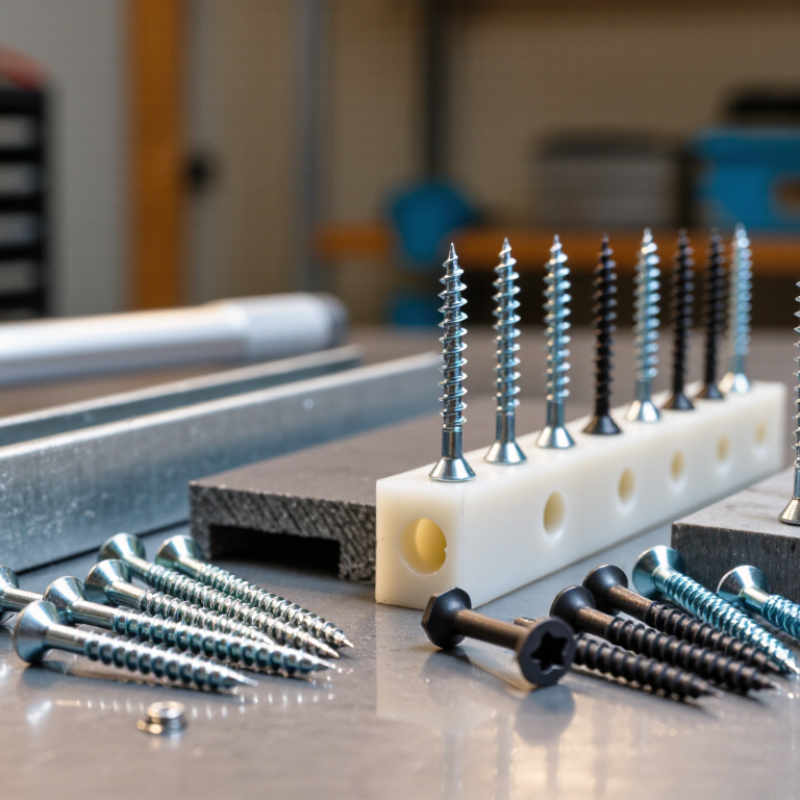
How to Choose Self Tap Screws in 2026?

Define Screw Types: ISO 1478 Tapping Screws vs ISO 15480 Drillers

How to Choose Self Tap Screws in 2026?

Choosing a self-tapping screw starts with identifying the correct standard. ISO 1478 tapping screws usually need a prepared hole before installation. Their sharp or blunt thread forms the mating thread inside the material. This option suits controlled assembly, especially when hole size and fastening torque are already specified.

ISO 15480 drilling screws include a drill point. The point cuts through suitable thin metal, then the screw thread engages the opening. No separate pilot drilling may be required. That saves a handling step, but only when the material thickness matches the screw’s drilling capacity. A drill point is not a universal solution.

Check the joint in real conditions. Measure sheet thickness, clearance, thread engagement, and access for the driving tool. Select a head style that seats firmly without damaging the surface. The screw’s material and coating should also suit moisture, temperature, and contact with other metals. I once saw a fastener spin without tightening because the pilot hole was oversized. Small details matter. ISO 1478 is often the better choice for repeatable holes and controlled torque. ISO 15480 can be more efficient on thin steel assemblies. Still, test samples before production. Installation speed can hide poor thread engagement, and published dimensions may not predict every material combination. Check the actual joint.

How to Choose Self-Tapping Screws in 2026?

ISO 1478 tapping screws vs ISO 15480 drilling screws

ISO 1478 Tapping Screws

Use a prepared pilot hole or a pre-punched hole in many applications. The screw forms or cuts the mating thread during installation and covers a wider nominal thread-diameter range.

ISO 15480 Drilling Screws

The drill point is designed to penetrate suitable sheet materials before the tapping section forms the thread, reducing the need for a separate pilot-hole operation when the material and thickness are compatible.

Chart data represents the nominal thread-size ranges specified by ISO 1478 and ISO 15480: ISO 1478, ST1.5–ST9.5; ISO 15480, ST2.9–ST6.3. These ranges describe standard coverage, not guaranteed performance in every material or thickness.

Select Size: ISO 1478 ST2.2–ST8 Diameters and Correct Thread Pitch

Choosing an ISO 1478 self-tapping screw starts with diameter, not head style. The ST number indicates the nominal thread diameter in millimetres. Common sizes range from ST2.2 to ST8. Use ST2.2 or ST2.9 for thin sheet and small enclosures. ST3.5 to ST4.8 suits many general metal panels. ST5.5, ST6.3, and ST8 require stronger material or higher load capacity.

Thread pitch matters just as much. Typical ISO 1478 pitches include 0.8 mm for ST2.2, 1.1 mm for ST2.9, and 1.3 mm for ST3.5 or ST3.9. Larger sizes may use pitches from 1.4 to 2.1 mm. Check the current technical table before ordering. A drawing or supplier listing can contain errors. I have seen mixed cartons labelled only by diameter, which creates avoidable assembly problems.

Match the screw to the base material and its thickness. A fine, undersized pilot hole can strip the first threads. A large hole can leave weak engagement. For thin steel, test the pilot hole on scrap and measure the formed thread. Aim for firm resistance without crushing the panel. Short screws may fail to engage fully, while excessive length can damage hidden parts. Torque-controlled installation improves repeatability, but the correct setting still depends on material hardness, coating, and screw geometry. Small mistakes show quickly.

Match Materials: ASTM C1513 for Steel-to-Steel and Timber Applications

How to Choose Self Tap Screws in 2026?

Choosing self-tapping screws begins with the materials, not the screw head. For steel-to-steel connections, ASTM C1513 provides a useful reference for steel tapping screws used with cold-formed steel framing. Check the required diameter, length, thread design, point style, and coating. The screw must pass through the first steel layer and engage the second securely. Thin sheet can strip easily. Thick sections may need a drill-point screw instead. A neat appearance does not prove a reliable connection.

Timber applications require more care. ASTM C1513 should not be treated as automatic approval for every wood connection. Confirm the screw’s intended use, withdrawal strength, corrosion resistance, and compatibility with treated timber. A screw made for light-gauge steel may not provide enough thread engagement in dense wood. Moisture also changes the decision. Outdoor timber, damp framing, and chemically treated wood can accelerate corrosion. Field conditions are rarely perfect. A slightly damaged coating or misaligned hole can weaken performance.

Tips: Measure both materials before ordering. Test a few screws in actual steel and timber samples. Inspect the threads after installation. Use the manufacturer’s technical data and project specifications. When the evidence is unclear, pause and verify rather than relying on appearance.

How to Choose Self-Tapping Screws in 2026? — Match Materials: ASTM C1513 for Steel-to-Steel and Timber Applications
Application Base Material and Typical Thickness Recommended Screw Diameter Recommended Length Head Style Point and Thread Selection Typical Finish or Material Key Selection Requirement
Steel-to-Steel Connections — ASTM C1513 Selection Guide
Light-gauge steel track to steel stud Cold-formed steel members, approximately 0.46–0.84 mm thick per connected layer #8 or #10 13–19 mm Hex washer head Sharp or self-drilling point; fine or high-low thread selected for thin steel Carbon steel with a corrosion-resistant coating suitable for the service environment Use a screw covered by the project specification and evaluated for cold-formed steel framing connections under ASTM C1513.
Steel stud to steel track, heavier connection Cold-formed steel members, approximately 0.84–2.46 mm thick per connected layer #10 or #12 19–25 mm Hex washer head Self-drilling point sized for the combined steel thickness; thread must engage the supporting member Coated carbon steel; select coating according to indoor, humid, or exterior exposure Confirm the screw’s tested capacity, edge distance, spacing, and installation requirements for the design load.
Steel framing member to steel backing plate Cold-formed steel framing connected to a thicker steel plate or structural steel support #12 or #14 25–38 mm Hex washer head Heavy-duty self-drilling point; select the point length for the total steel thickness Corrosion-resistant coated carbon steel or stainless steel where specifically permitted Do not select by diameter alone; verify drilling capacity, pull-out resistance, shear resistance, and minimum penetration.
Multiple layers of cold-formed steel Two or more steel sheets or framing members with a combined thickness above a single-sheet connection #10, #12, or #14 25–50 mm Hex washer head or low-profile head where clearance is limited Self-drilling point matched to the combined thickness; avoid a point that exits into a service zone unnecessarily Finish selected from the project corrosion category Check that the threads fully engage the final steel member and that the screw does not damage concealed services.
Steel-to-steel exterior or high-humidity installation Galvanized or coated steel framing exposed to moisture, condensation, or intermittent wetting #10, #12, or #14 19–38 mm Hex washer head with an integral or compatible sealing washer where required Self-drilling point with a thread form suitable for the steel thickness Use a coating or stainless-steel grade compatible with the exposure and with the connected metals ASTM C1513 selection does not replace the project corrosion-control requirements; evaluate galvanic compatibility and coating damage.
Timber Applications — Separate Material-Matching Guidance
Steel bracket or strap to softwood timber Common structural softwood, such as spruce-pine-fir, with steel hardware up to approximately 3 mm thick #10 or #12 wood-compatible screw 38–65 mm Hex washer head or structural washer head Sharp penetrating point with coarse wood thread; do not use a fine-thread steel-framing screw as a substitute Exterior-rated corrosion-resistant coating or stainless steel, depending on exposure ASTM C1513 is intended for steel tapping screws in cold-formed steel framing; use a wood-rated fastener with published timber capacities for timber connections.
Steel plate to hardwood timber Dense hardwood or engineered timber with a steel plate or connector #12 or #14 wood-compatible screw 50–90 mm Structural washer head or countersunk head when the hardware permits it Coarse partial thread; predrilling may be required to reduce splitting and installation torque Stainless steel or an exterior-rated protective coating compatible with the timber species Confirm withdrawal, lateral, and embedment capacities using the applicable timber design standard and the fastener’s technical data.
Timber-to-timber framing connection Softwood or engineered wood members where no steel sheet is being tapped Typically 5–8 mm nominal shank diameter 60–120 mm, depending on member thickness and required penetration Washer head, countersunk head, or cylindrical head according to the connection detail Coarse full or partial wood thread; select a tip designed for timber penetration Exterior-rated coated steel or stainless steel for damp or outdoor conditions Do not specify an ASTM C1513 steel tapping screw solely because it is self-tapping; the fastener must be designed and rated for timber.
Timber connection in treated wood Pressure-treated timber containing preservative chemicals that may accelerate corrosion Commonly #10–#14 or 5–8 mm, subject to the structural design Length selected to provide the required wood penetration without over-penetration Washer head or structural head with adequate bearing area Coarse wood thread; predrill dense or split-prone timber where required Use a fastener material or coating specifically compatible with the treatment chemistry Check the treatment supplier’s fastener requirements; ordinary indoor coatings may be unsuitable for treated timber.
Fastener Dimension and Installation Checks
Diameter selection Determined by required shear, pull-out, pull-over, and bearing capacity #8 ≈ 4.2 mm; #10 ≈ 4.8 mm; #12 ≈ 5.5 mm; #14 ≈ 6.3 mm nominal shank diameter Not applicable Select a head with sufficient bearing area for the connected material Larger diameter generally increases capacity but may require greater installation torque and clearance Material and coating must remain compatible with the connected materials Use design values rather than diameter alone; verify the manufacturer-independent test data or governing design standard.
Length selection All connected layers plus the required thread engagement in the supporting material Not applicable Steel-to-steel: normally enough length for full engagement in the supporting sheet; timber: provide the designed embedment length Head must seat firmly without crushing thin sheet or timber fibers Avoid excessive point projection where it could create a safety or service-clearance problem Protect exposed cut edges and damaged coating when required by the specification Measure actual material thicknesses before ordering; nominal screw length alone does not confirm adequate engagement.
Installation control Thin steel, thick steel, timber, and mixed-material assemblies Use the selected diameter and point for the actual substrate Install perpendicular to the surface unless the connection design states otherwise Seat the head fully without over-driving Use a controlled driver setting; stop when the washer seats or the head reaches the specified position Inspect for coating damage, thread stripping, splitting, and incomplete penetration Replace screws with stripped threads, damaged heads, over-driven washers, or visibly damaged protective coatings.
Important scope note: ASTM C1513 is a steel-framing fastener specification for steel tapping screws used in cold-formed steel framing connections. Timber applications require a fastener specifically rated for wood and must be checked against the applicable structural timber design requirements, exposure conditions, and project specifications.

Choose Strength and Coating: ISO 898-1 Grades and ISO 10683 Zinc Flakes

How to Choose Self Tap Screws in 2026?

Strength starts with the ISO 898-1 grade, not the package label. Grade 8.8 offers a nominal tensile strength of 800 MPa. Grades 10.9 and 12.9 reach 1,000 and 1,200 MPa. Their higher strength can reduce thread stripping in thick steel. However, a stronger screw may damage thin sheet before the joint is secure. Check the base material, pilot-hole diameter, and installation torque together.

Coating choice is equally practical. ISO 10683 covers non-electrolytically applied zinc flake coatings, often combining zinc and aluminum flakes. These coatings avoid the electroplating process and can reduce hydrogen-embrittlement concerns. The standard also addresses coating performance, friction, and application requirements. Do not judge protection by color alone. Measure coating thickness and review corrosion-test results under ISO 9227 conditions. A 2024 World Steel Association report recorded more than 1.8 billion tonnes of global crude steel production in 2023, showing the scale of steel-based assembly demand.

At the workbench, compare coated screws from the same batch. Record driving torque, seating torque, and thread damage. A smooth zinc-flake surface can change friction noticeably. That affects clamp load, even when the screw grade remains identical. One overlooked detail is washer compatibility. Mismatched surfaces may loosen after vibration. I would not select 12.9 automatically; excessive strength can create a brittle, poorly balanced joint. Standards guide the decision, but real installation data should challenge it.

Validate Performance: ASTM F606 Pull-Out, Torque, and Corrosion Testing

Choosing self-tapping screws in 2026 requires more than matching diameter and thread length. Validate performance with controlled testing. ASTM F606/F606M can support mechanical evaluation where applicable, but it should not be treated as a complete pull-out standard. Define the test method, substrate, pilot-hole size, installation speed, and failure criteria before testing. A screw pulled from thin sheet behaves differently from one installed in structural steel.

Pull-out testing should record peak load, displacement, and the failure mode. Did the thread strip, the sheet tear, or the screw fracture? Small details matter. Use several samples, not one successful result. Torque testing should capture installation torque and over-torque behavior. A calibrated driver, consistent angle, and clean test fixture improve repeatability. In practice, inconsistent pilot holes can change results dramatically. That weakness is easy to miss.

Corrosion testing needs exposure conditions that match the application. Salt spray may provide useful screening, but it does not perfectly reproduce outdoor humidity, pollutants, or trapped moisture. Consider a recognized corrosion method, such as ASTM B117, alongside project-specific exposure testing. Inspect coating damage, red rust, thread seizure, and torque changes at scheduled intervals. Keep photographs, batch records, and environmental readings. A polished report can still hide poor sampling. Choose the screw only after performance data agrees with the installation environment, material thickness, and service load.

FAQS

What is the main difference between ISO 1478 tapping screws and ISO 15480 drilling screws?

ISO 1478 screws usually need a prepared hole before installation. ISO 15480 screws have drill points for suitable thin metal. No pilot drilling may be needed. Test the material first.

When should an ISO 1478 tapping screw be selected?

Choose it when hole size, thread engagement, and driving torque require close control. It suits repeatable assemblies with prepared holes. A controlled process matters.

When are ISO 15480 drilling screws more efficient?

They can save one handling step in thin steel assemblies. Their drilling capacity still depends on material thickness. A drill point is not universal.

How should the screw diameter be selected?

The ST number shows the nominal thread diameter in millimetres. ST2.2 and ST2.9 suit thin sheets or small enclosures. ST3.5 to ST4.8 fit many general panels. Larger sizes need stronger material.

Why does thread pitch matter?

Thread pitch affects engagement, forming force, and stripping risk. Check the current technical table before ordering. Diameter-only labels can cause assembly errors.

How can pilot-hole size affect fastening quality?

An oversized hole may let the screw spin without tightening. An undersized hole can strip the first threads. Test scrap material and measure the formed thread. Small errors matter.

Should the strongest screw grade always be chosen?

No. Higher-strength grades may damage thin sheet before clamping properly. Match screw strength with material hardness, hole size, and installation torque. Stronger is not automatically better.

What should be checked when selecting a zinc-flake coating?

Review coating thickness, friction, and corrosion-test results. Do not judge protection by color alone. Compare screws from the same batch. Surface friction can change clamp load.

Why should sample testing happen before production?

Published dimensions may not predict every material combination. Record driving torque, seating torque, and thread damage. A fast installation can hide weak engagement. The joint may disagree.

Conclusion

Choosing the right Self Tap Screw in 2026 requires more than selecting a convenient size. Begin by distinguishing ISO 1478 tapping screws, which form threads in pre-drilled materials, from ISO 15480 drillers, which can create their own holes in suitable applications. Select the diameter from ST2.2 to ST8 and match the thread pitch to the material thickness and density. For steel-to-steel connections or timber projects, use requirements aligned with ASTM C1513 to support reliable installation and holding performance.

Next, evaluate mechanical strength and surface protection. ISO 898-1 strength grades can help determine whether the screw is suitable for the expected load, while ISO 10683 zinc-flake coatings may improve resistance to corrosion in demanding environments. Before final approval, validate the selected screw through pull-out, installation torque, and corrosion testing based on ASTM F606. This process helps confirm that the Self Tap Screw delivers dependable performance, consistent installation, and an appropriate service life.

Liam

Liam

Liam is a dedicated marketing professional with a profound expertise in the industry, where he excels at highlighting the unique advantages of our core products. With a keen understanding of market trends and consumer needs, Liam frequently updates our company’s professional blog, providing......