1 / 1

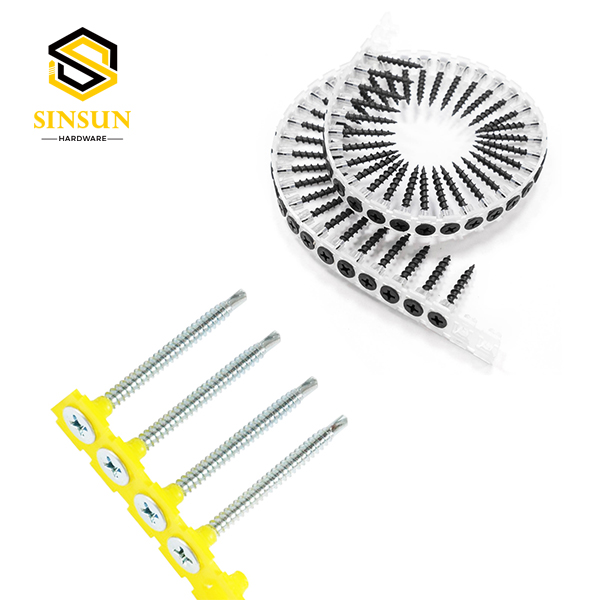
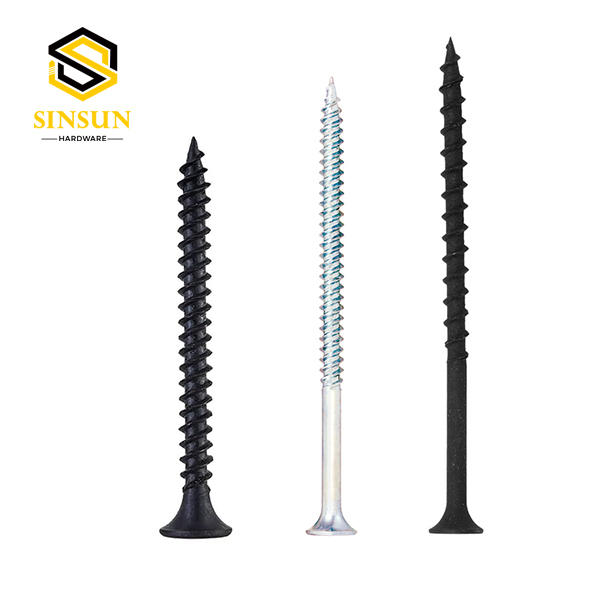
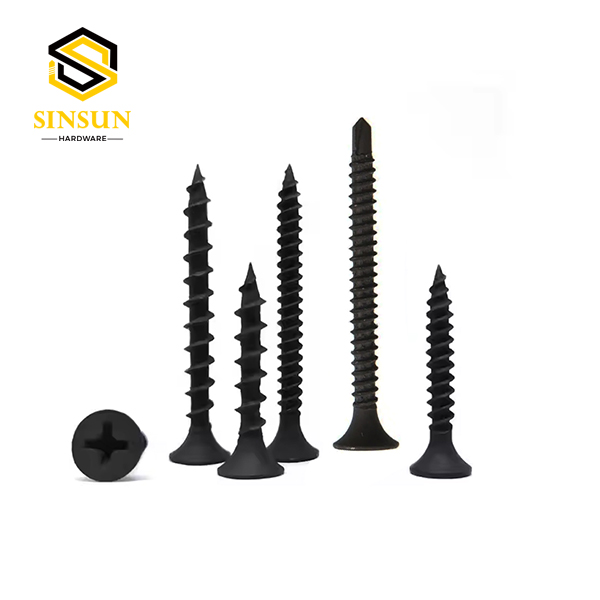
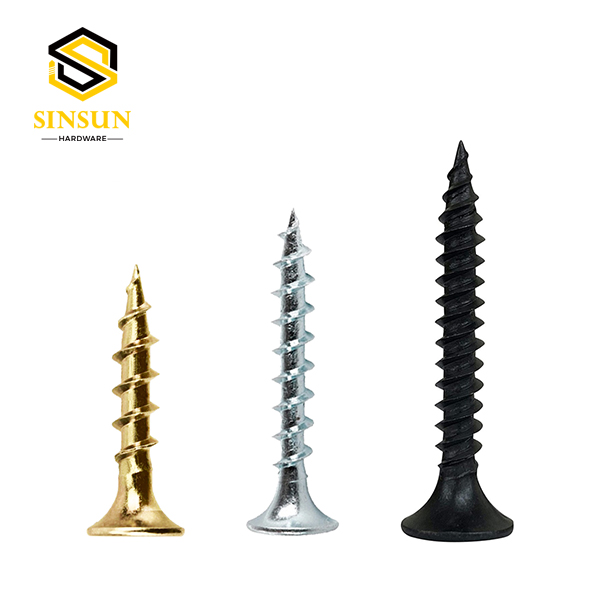
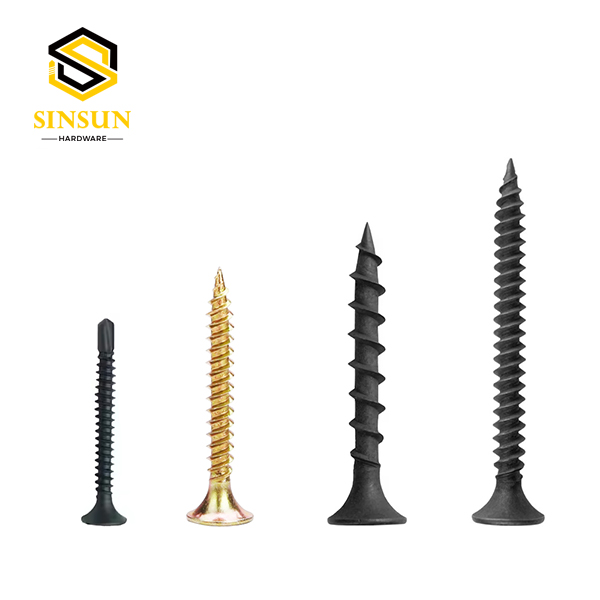
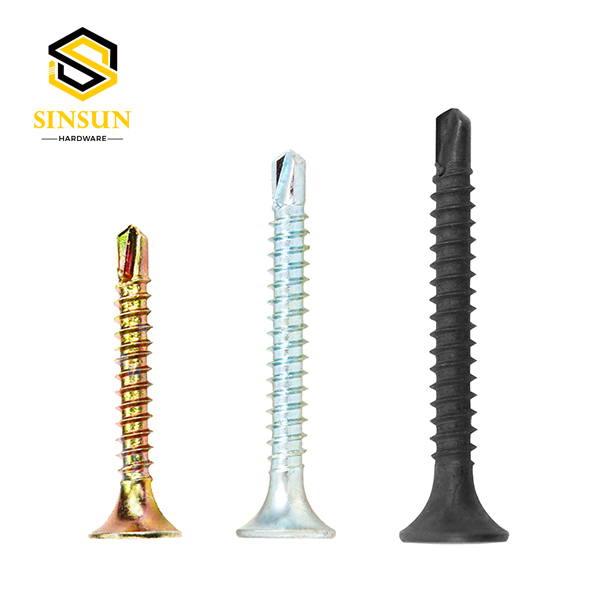
Collated drywall screws are assembled into strips designed specifically for auto-feed screw guns. This significantly speeds up installation processes, reduces labor costs, and minimizes waste on high-volume drywall and plasterboard projects.
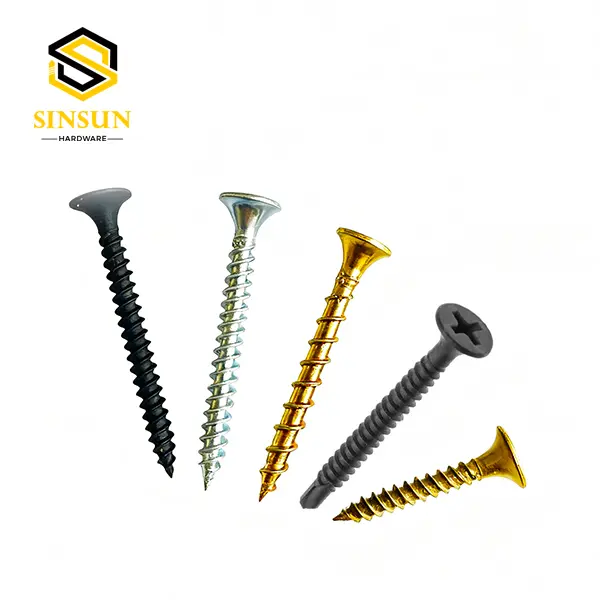
Black phosphate is a surface treatment that provides basic corrosion resistance. Crucially, this matte finish offers superior adhesion properties for drywall mud, joint compounds, and paints, preventing them from peeling off the screw head.
Coarse thread drywall screws are designed for fastening drywall to wood studs, as the wider threads grip wood fibers securely. Fine thread screws are optimal for fastening drywall to metal framing studs, as they tap and hold better in thin metal sheet.
Self-drilling drywall screws feature a drill-point tip that cuts through metal studs (usually 20 to 12 gauge thickness) without requiring pre-drilled pilot holes. They are ideal for commercial steel framing drywall installations.
Drywall screws should be driven so that the bugle head is slightly countersunk below the surface of the plasterboard paper, forming a clean dimple. Avoid driving them too deep, as breaking the paper surface will compromise the screw's holding power.