High-Precision Prevailing Torque Engineering, Corrosion Resistance, and Certified Fastening Systems for Severe Industrial Applications Worldwide
Explore our comprehensive portfolio of certified components designed for extreme environments
In modern structural and mechanical assemblies, rotational loosening due to vibration, shock, and thermal expansion poses a constant threat to system integrity. The Self-Locking Acorn Nut represents a highly engineered fusion of protection and resistance. By combining the aesthetic, thread-shielding properties of a traditional dome nut (acorn cap nut) with an integrated anti-loosening locking feature, these fasteners secure critical junctions.
Whether for automotive engine bays, marine equipment, solar mounting structures, or high-vibration manufacturing equipment, ODM customization is critical. Variations in thread pitch (UNC/UNF, metric), locking insert composition, dome depth, and base coatings must be tailored to combat galvanic corrosion and tension relaxation.
Strategic movements shaping next-generation assembly specifications across heavy industries
The global push for emissions reduction in aerospace and electric vehicle (EV) sectors has triggered a transition from carbon steels to high-tensile lightweight alloys. Fasteners must adapt. Sinsun's ODM process specializes in forming aluminum alloy, duplex stainless steel (A2/A4 grade), and titanium self-locking acorn nuts that reduce overall weight without sacrificing torque retention or tensile integrity.
Global regulatory bodies (RoHS, REACH) continue to enforce restrictions on heavy metal surface treatments. Hexavalent chromium coatings are obsolete. Today's procurement prioritizes eco-compliant coatings like zinc-nickel, chrome-free Dacromet, and Geomet. These provide over 1,000 hours of salt spray resistance (ASTM B117) and prevent hydrogen embrittlement in high-strength carbon steel.
Standard nylon insert nuts degrade above 120°C. Heavy industrial processing plants, marine engine bays, and chemical reactors require all-metal self-locking cap nuts. By utilizing deformed-thread technology or stainless steel spring locking rings, our all-metal prevailing torque nuts withstand temperatures up to 300°C while resisting dynamic shear strain.
In modern B2B procurement, procuring fasteners is no longer about buying standard components at the lowest price; it is about mitigating operational risks. Under Google's Search Quality guidelines, supply chain authority relies on the supplier's capacity to deliver quality assurances.
How Sinsun Hardware integrates German engineering with smart logistics to secure global supply chains
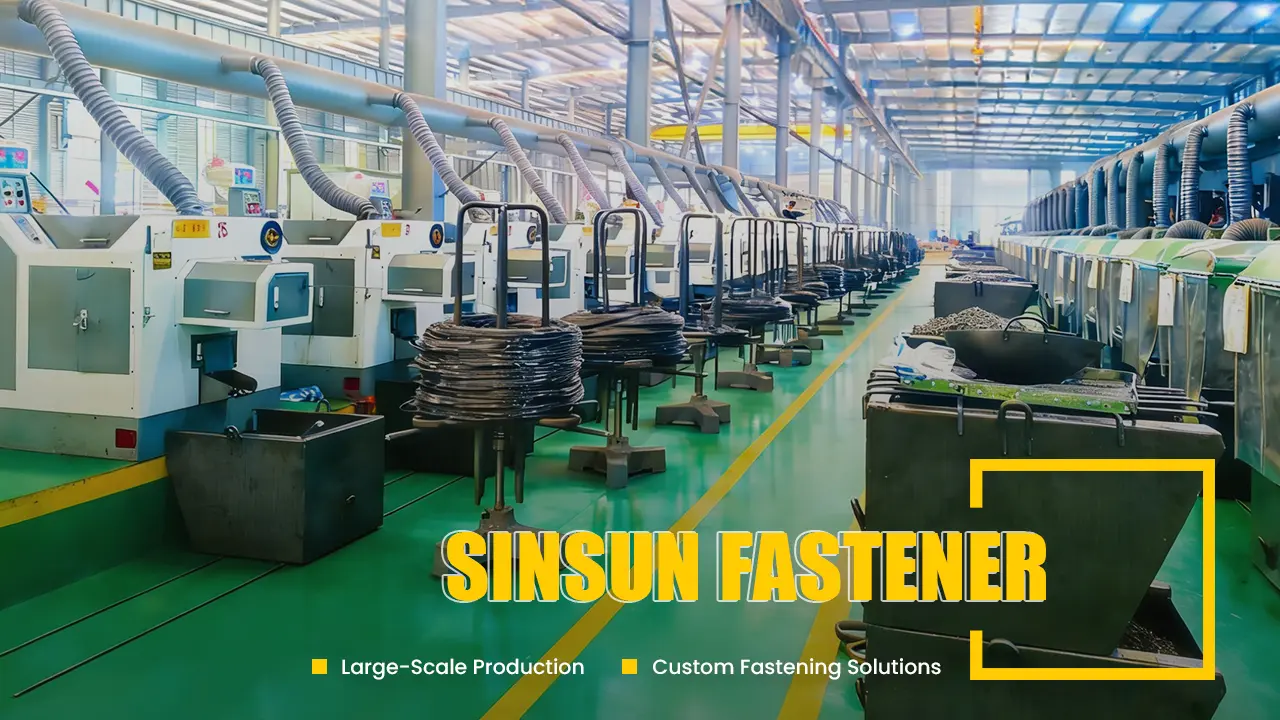
Sinsun operates over 200 German-imported multi-station cold heading machines (capable of producing up to 1,200+ pieces/min per unit). This allows us to process high-tensile wire coils into cold-forged acorn nut preforms with flawless grain structures and near-zero scrap rates.
Our facility features 4 gas-fired continuous mesh belt conveyor heat-treatment lines with a capacity of 20 tons/day. Precise carbon-potential atmospheres and controlled cooling rates ensure uniform hardness profiles (HRC 28-32 for Grade 8, and custom hardening up to HRC 38 for Grade 10).
Holding over 18,000 pallet positions, Sinsun's smart logistics dispatch integrates raw-material inspection records with finished-product SKU packing data. Automated optical scanners sort 3,000+ cartons/hour, enabling direct container loading of up to 50 TEUs/day.
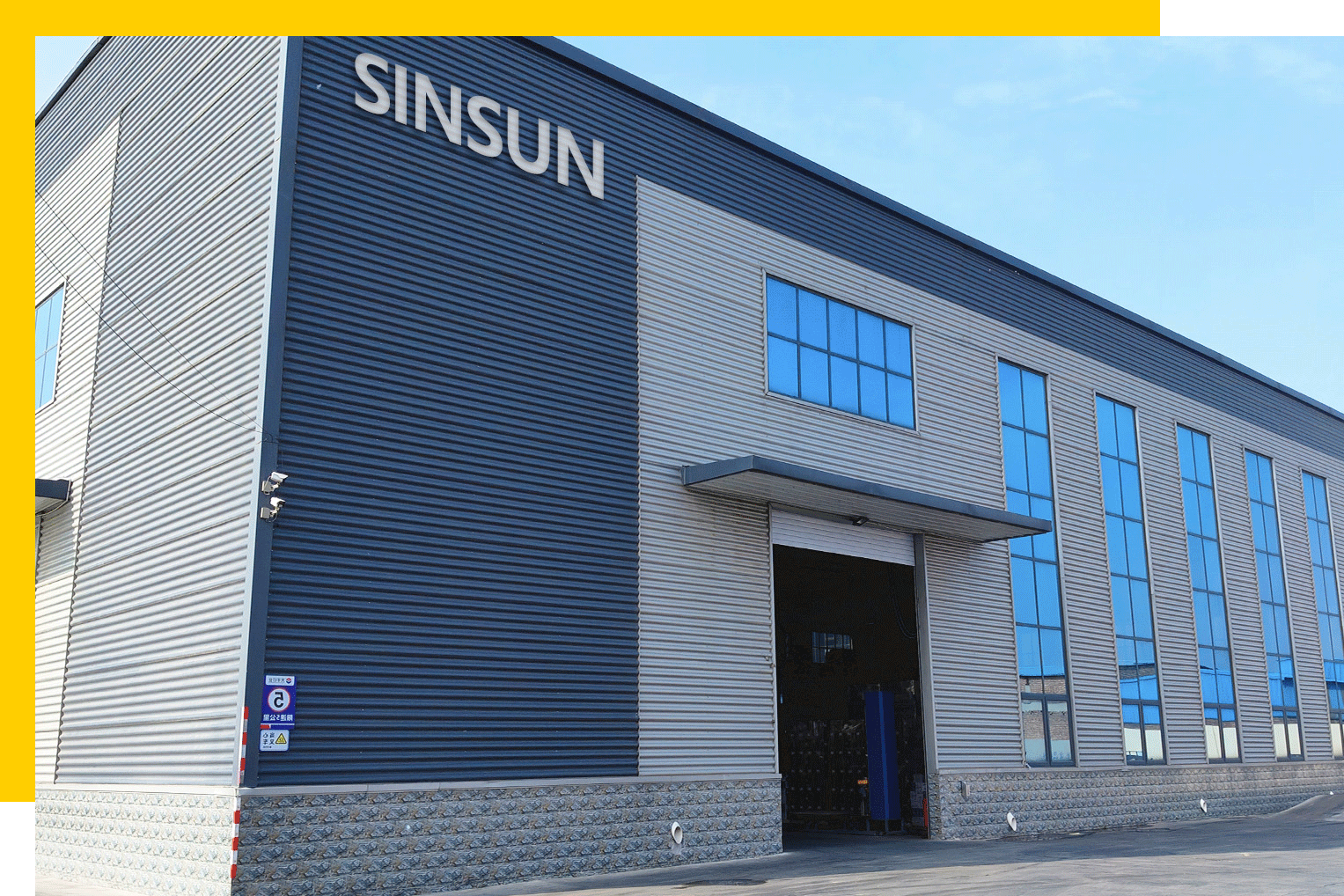
Founded in 2006, Sinsun Hardware has grown from a regional producer in Northern China to a global industrial fastener manufacturer. Today, we occupy a massive 30,000 square meter integrated facility, servicing key international markets including Europe, the Middle East, Southeast Asia, South America, and Russia.
Our engineering team assists OEM partners from material analysis and CAD prototyping to custom tool design and multi-station forging. We maintain total vertical integration—meaning we control spheroidizing annealing, wire drawing, cold heading, thread forming, heat treating, custom coating, and automated packaging. This ensures complete control over quality and lead times.
With 12+ stringent quality checks conducted in our in-house laboratories (including torque-tension analysis, micro-Vickers hardness, and spectroscopic material verification), we guarantee that each batch meets international standards (ISO, DIN, ANSI, JIS).
Sinsun customizes fastener profiles to match your engineering specifications and environmental demands
| Feature Parameter | Standard Range & Materials | ODM Custom Options Available |
|---|---|---|
| Nominal Thread Diameter | Metric: M3 to M36 | Inch: #4 to 1-1/2" | Specialized pitches, extra-long thread engagements |
| Standard Conformity | DIN 986, ISO 10511, ASME B18.16.6 | Custom structural shapes, taller/shallower dome depths |
| Core Base Materials | Ansteel C1022A Carbon Steel, Stainless Steel SS304/SS316 | Duplex Steel, Titanium Alloys, Brass, Silicon Bronze |
| Mechanical Properties | Grade 6, Grade 8, Grade 10 (DIN/ISO classes) | Special structural properties up to 1,200 MPa tensile strength |
| Self-Locking Mechanisms | Standard Nylon Insert (-40°C to 120°C) | High-temp Glass-fiber Filled Nylon, Metallic Prevailing Torque Rings |
| Anti-Corrosion Finishes | Electro-Zinc Plating (Blue, White, Yellow), Black Oxide | Dacromet, Geomet, Zinc-Nickel, Hot Dip Galvanizing (HDG) |
| Quality Validation | 12-stage Quality Checks, micro-hardness (HRC), torque test | FMEA documentation, full PPAP Level 3 reports |
Sinsun self-locking acorn nuts are deployed across demanding industrial fields
Saltwater splash zones cause rapid galvanic corrosion. Sinsun's duplex stainless steel self-locking acorn nuts shield critical bolt threads from seawater contact while preventing rotational loosening caused by wave energy.
Exposed to high winds and extreme daily thermal cycling, solar tracking arm joints experience constant stress. Our prevailing torque dome nuts lock clamping tension in place, reducing structural fatigue and maintenance inspections.
Engine bays present severe vibration and thermal conditions. Sinsun customizes nylon and all-metal locking configurations that maintain uniform torque values even when exposed to high automotive fluid temperatures.
Proof of performance in extreme industrial environments
Challenge: A tier-1 automotive supplier faced loosening of structural engine flange bolts and cap covers, leading to fluid leaks and engine vibrations during thermal cycles.
Sinsun Solution: We designed a custom-molded alloy steel prevailing torque acorn nut with a high-temperature glass-fiber-filled nylon insert. The thread geometry was optimized to ensure uniform stress distribution along the mating bolt thread.
Result: Achieved a 15% overall weight reduction, and assemblies passed 2,000 hours of cyclic vibration testing. Standard production lines integrated this without modification, eliminating on-site leakage claims.
Challenge: An offshore oil platform contractor experienced critical thread failure due to saltwater corrosion on traditional open-end hex locking nuts.
Sinsun Solution: We supplied Marine Grade SS316 self-locking acorn nuts featuring a sealed deep-dome cavity and electro-passivated finish. This protected the bolt threads from oxygen-deprived saltwater pockets.
Result: Zero fastener structural failures reported over a 5-year operational lifecycle, significantly reducing downtime and maintenance costs.
Technical guidance for B2B procurement managers and fastener engineers
Durable factory-direct solutions engineered to secure your industrial assemblies